
Songwriting Tools to Help You Write a Better Song

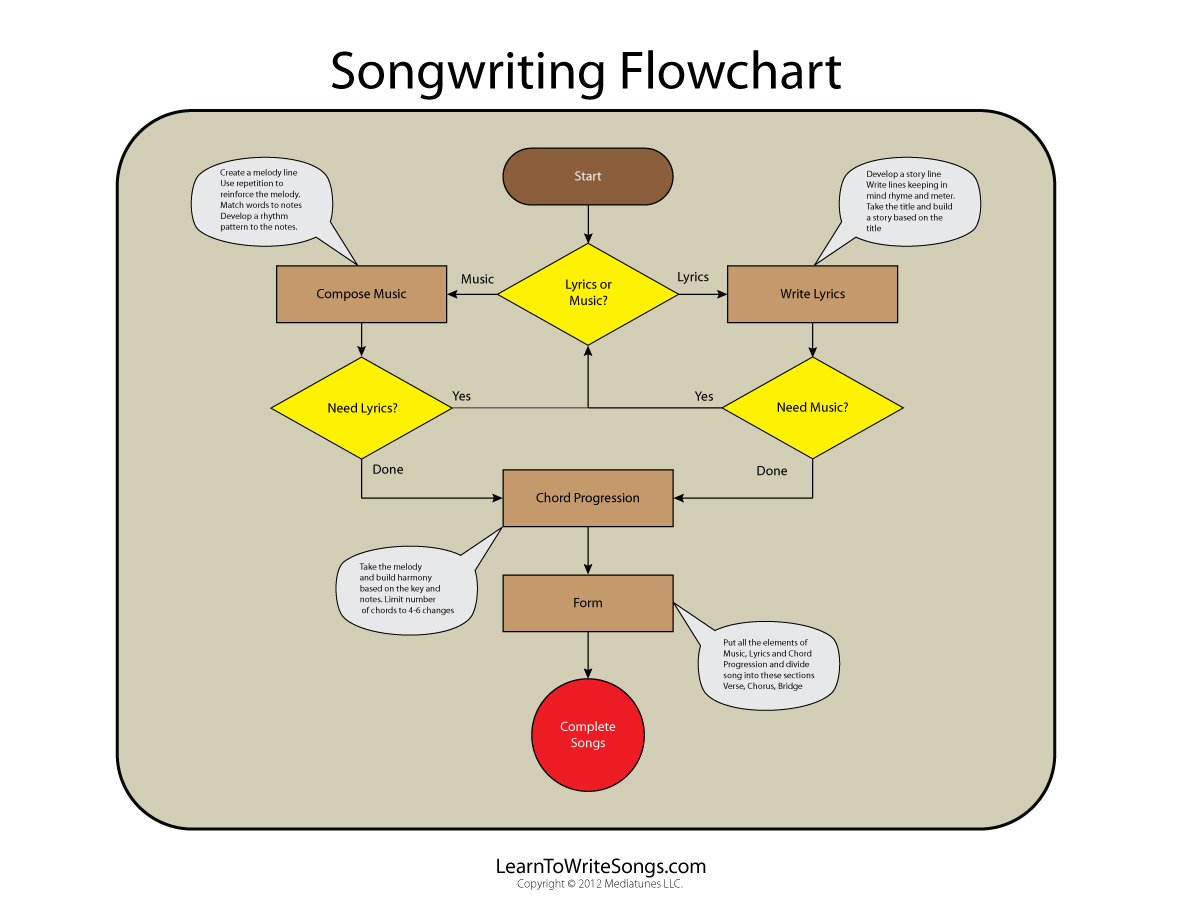
This website has several online songwriting tools to help you write and create songs. These tools will help jump start your songwriting efforts. We will explore each one of the tool in a step by step fashion. So lets get started looking at these songwriting tools.
Step 1: Getting a title
Every song needs a strong title. Oftentimes this is the first spark of inspiration. Titles can be found just about anywhere. To help you get song title ideas go to the “Random Song Title Generator“. This songwriting tool will help you find a series of titles randomly generated. Some may seem silly or don’t make sense. But as you go through the list there may be something that appeals to you. Make that your title. Add this to a new document in your favorite text editor.
Step 2: Create a Word Bank.
Having a bank of words will help give you a lot of ideas and themes for your song. What you need to do next is insert the words from the title you created in step 1 and enter each word in the Synonyms search tool. Add these words to your text document. You can expand the list of words by finding synonyms for the synonyms.
Step 3: Rhyming Words
Go to the rhyming dictionary songwriting tool and enter each of the words from the title. The online tool will create a list of rhymes, near rhymes, and slant rhymes. Copy these words to your text document. Once you’ve done the title, pick a few of the relevant synonyms generated in step 2. By this time you will have a lot of words to choose from.
Step Four: Free Write
Now that you have a large bank of words, start free writing. To do this take the title and expand of the idea and concept of the title. Remember to use words from your word bank. At this point you may or may not have a lyric, but it will get your though process stimulated. Go to the Song Prompt tool to give you more ideas
Step Five: Give the Song a Form
All songs have structure. These are the various parts of the song. By giving your song structure will provide a framework and foundation for your song. Go to the Random Song Form Structure Generator. This online tool will provide you with a song structure from which you can develop your song. As with the previous tools, take the song form generated from the tool and add it to your text document.
Step Five: Create Chord Progressions
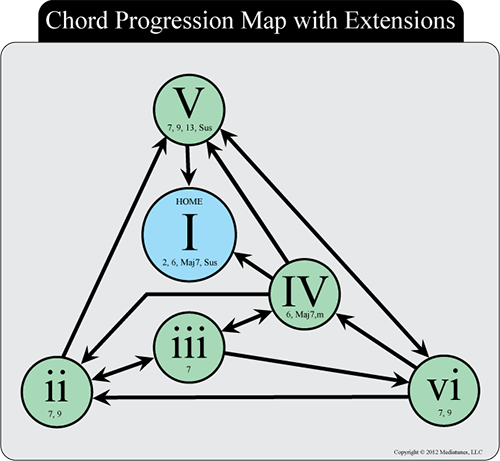
Go to the Interactive Chord Progression Generator and start creating chord progressions. There are a few options here. You can create a chord progression for each section of your song. Or you could create one progression that plays throughout the song. Or a combination of both, where one section like the bridge is different, but the verse and chorus has the same chord progression. Now take the progressions you created and add them to your text document where each set of chords goes into the appropriate song form section.
Step Six: Find A Song Key
To avoid writing all your song in one or two keys use the Find A Key Wheel Spinner This tool will help you to easily find a new song key in which to write your song. Spin the wheel to get your song key and of course add this to your text document. Also, you can translate all the chords from step five to chord in the key selected.
Step Seven: Place the Title
Go to your song structure and place the title is the usual place a title is often found. This could be the first or last line of the chorus. Of the first or last line of the verse, This of course can depend on the song structure.
Step Eight: Set a Rhyming Scheme
All songs have some sort of rhyme scheme. Decide on a rhyme scheme for your song. Create one for each section of your songs. Some popular scheme include:
ABAB, ABBA, ABAC,
For more ideas find a popular song and pick out the rhyme scheme and use it in your song. Take a look at the word bank of rhymes you created in step 3. Try plugging those words into the rhyme scheme.
Step Nine: Start Melody With a Motif
Every song needs a melody. To star writing a melody you need a motif. A motif is a small group of notes. To help you with ideas for a motif you can use the Melody Shape Generator. This app will provide you with a series of notes that will rise and fall in pitch giving your melody a shape. Once you find a series of notes that sound appealing you will want to give it a rhythm. You can do that by playing the notes or use the next app which gives you a rhythm motif to use with your melody shape.
Step Ten: Get a Rhythm Motif
The next tool you want to use is the Random Rhythm Motif Generator. By using this tool you can create unique melody rhythm patterns. From these patterns you can start to build a melody. This motifs will create a meter for each line of lyric.
Step Eleven: Improvise Over a Beat
Pick up your instrument of choice, be it a piano or guitar, and find a beat from the Drum Loops for Songwriters section of this website. Go to a genre that you feel the song is best suited and start playing the chord progression you previous created in step 5. Use the rhythm motif from step nine and start fleshing out a melody. When you get to the part where the title is sing those words. If you included the rhyme words sing those words as well. Hum any parts where there are no words. During this time it highly recommended that you have a recorder available to save your work in an audio format.
Step Twelve: Refine and Rewrite
At this point you have a very solid foundation for your song. What you need to do now is to take all of these elements and blend them into a completed song. You may even have enough for an entire series of songs If at anytime you get stuck or feel you are going in the wrong direction, don’t hesitate to use any one of these songwriting tools over again.
Final Word on Songwriting Tools
Songwriting tools can help you when you are stuck for ideas. They will assist you in jump starting creativity. Keep in mind to use these as idea stimulation. You will still need to do the hard work of creating a complete song.
Have fun and enjoy writing your masterpiece using these songwriting tools.










Keep working ,fantastic job!
I think this is an interesting way to write lyrics but not songs. The most successful songwriters always begin with a strong melody upon which the lyricist writes his story to create the song. From Harold Arlen, to Richard Rodgers to Adler & Ross to Burt Bacharach to Paul Simon to Elton John to Frank Zappa to David Foster and on and on it is always the melody that is the springboard from which the lyrics take flight. When you start with the lyrics you are working backward and if you are able to get a good melody and interesting harmonic sequence it is just luck.