
The Best Way to Create a Song’s Story Structure

The song is the foundation of the music business. A great song is vital in building success in the music industry. Another key element of songwriting is you do it because you love writing songs. Every song has a story. One thing a songwriter needs to master is structuring a song’s story.
The beauty of songwriting is it allows you to express your ideas though a creative medium. Taking raw emotion is the seed that can germinate new ideas. You can write about being in love or being angry about a social issue.
A song is the vehicle that takes your ideas and turns it into a powerful tool of communication. With songwriting you have the ability to freely express yourself as an artist.
Within the lyrics of a song is power.
Songs have the power to affect people’s lives. The songs you write will impact others in many ways. A well written song will bring the listener to a place of relationship.
Emotions and Entertainment
As a songwriter your job is to create music that communicates emotions that people relate with in their lives. You want to create a connection. The song needs to take your listener on an emotional journey. It needs to be entertaining so they want to listen to it several times. This connection with the listener is vital to great songwriting. Finding the right words when writing a song is sometimes a challenge.
Telling a Story
Storytelling is one of the best ways to communicate. Song that communicates tells a story. A good story will have certain elements and structure. A basic story at minimum will have a starting point, an event or conflict, a middle that chronicles the journey and the end where the conflict is resolved.
Basic Song Structure
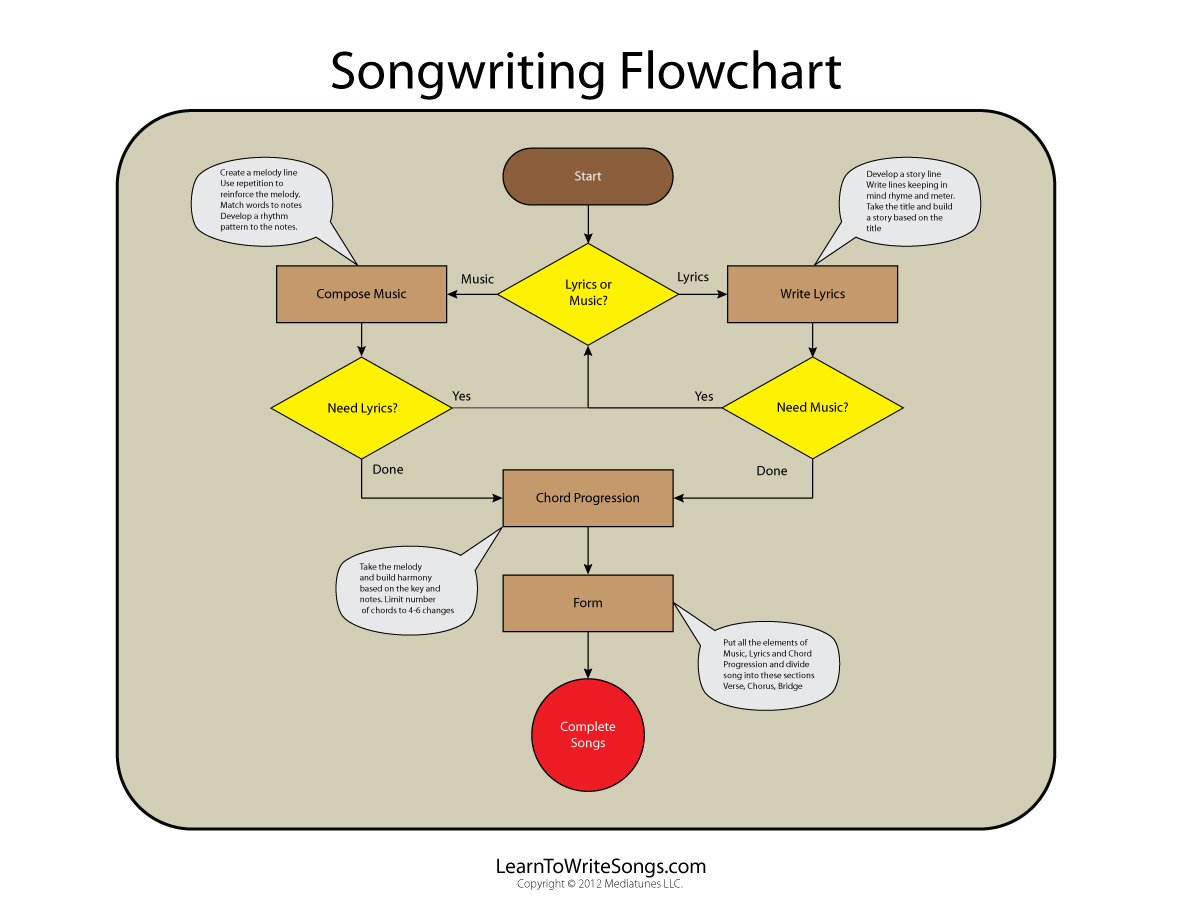
The structure of a song helps the songwriter organize the different parts of a story. This is called the “song form.” These are the basic building blocks of a song. Each section performs a specific task. A majority of songs follow this song form pattern.


Each part is separate and distinct yet works to support the other parts. Here is a look at each part and its function within the song.
INTRO:
This is where the song begins. It needs to be memorable enough to catch the listener’s ear. This section should be only 4-8 measures in length. The intro should have some sort of musical hook or the main melodic riff.
VERSE:
The verse provides the details of the story. It will set the scene, introduce characters, and provide some sort of conflict. The ultimate goal of the verse is to set up the chorus. Each line needs to have a consistent meter by matching words and syllables to the beats of the melody. The verse will contain a consistent rhyme pattern. A good verse will build up a sense of anticipation.
CHORUS:
This is where you provide fulfillment of the anticipation created in the verse. The chorus contains a summary of your message. The key message is contained in this part of the song. The hook is found in the chorus of the song. This is what grabs the listener. Therefore, don’t wait too long to get to the chorus. The words and melody need to be memorable.
VERSE:
The second verse provides more details to your song’s story. Stay on track or you will confuse your listener. Again there needs to be a sense of story and melodic anticipation that leads into the chorus.
CHORUS:
This section is an exact repeat of the previous chorus. Since the chorus contains the hook it is important to repeat it. Repetition helps reinforce the songs memorability.
BRIDGE:
The bridge provides a lyrical and musical change in the songs general feel. It helps to break things up a bit. In this section the songwriter can provide a different perspective on the story. This section is also used to provide a musical interlude. Just like the intro keep this section relatively short. A good length is 8 measures. The bridge needs to build energy that leads into the final chorus. This section needs to build to the song ultimate climax.
REPEAT CHORUS.
As the song comes to an end the chorus will be repeated several times. This embeds the hook into the listeners mind. The tension and climax of the previous section is resolved in this section of the song. The key to a good hook is to repeat it several times in the song. You will also find that many songs will contain more than one hook.
Final Thoughts on How to Create a Song’s Story Structure
Learn from other songwriters and what is popular. Take those ideas and morph them into new ones. Always strive to be original and create a unique and different sound. Turn something current into something new that has your own unique identity to it.
To help you build song forms use the online Random Song Form Structure Generator













Leave a Reply